
If you’re staring at your home wondering whether fiber cement siding is worth the investment or if you should go with vinyl, wood, or one of the other nine options available, don’t worry. Choosing the right siding material can feel overwhelming when you’re looking at costs that average around $11,503 for replacement, and you want to make sure you’re making the smart choice.
Here’s the good news: fiber cement siding isn’t just popular, it’s also one of the smartest investments you can make for your home. Indeed, installing fiber cement siding recoups 114 percent of its cost at resale, beating out nearly every other material. In this guide, I’ll break down all 11 siding materials step by step, including fiber cement board siding installation, fiber cement siding cost comparisons, and specifically how james hardie fiber cement siding stacks up against alternatives like vinyl. No complicated jargon, just real information to help you decide what works best for your home.
Fiber Cement Siding

Image Source: James Hardie
“ColorPlus® Technology is just a game changer. We put it on a house that we did in 2004, and it’s never had to be repainted. It’s never even had to be touched up.” — Mary Hatcliff, Hatcliff Construction
What is Fiber Cement Siding
Fiber cement siding combines Portland cement, sand, water, and cellulose fibers into a composite material that mimics wood, stucco, or stone without the maintenance headaches. James Hardie introduced this product in the mid-1980s as a safer alternative to asbestos-containing siding. The material gets its strength from cement while cellulose fibers add flexibility, preventing brittleness and cracking under pressure. In 2022, about 21% of new single-family homes used fiber cement siding, making it one of the most trusted exterior materials available.
Pros of Fiber Cement Siding
Fire resistance stands out as a primary advantage. Fiber cement won’t ignite when exposed to direct flame and carries a Class A fire rating. Some insurance companies recognize this benefit and may adjust premiums accordingly.
Durability against weather extremes sets fiber cement apart from vinyl or wood. The material resists warping, cracking, and fading while withstanding hurricane-strength winds and hail. Termites and woodpeckers avoid it entirely, saving you from costly pest damage.
Design versatility gives you freedom. Fiber cement comes in lap siding, panels, and shingles with various textures including woodgrain, smooth, and stucco finishes. Many homeowners’ associations approve it because it replicates traditional wood appearances while meeting strict guidelines.
Maintenance stays minimal compared to wood. You’ll rinse it with a garden hose once or twice yearly, and manufacturers offer pre-finished colors baked onto boards for maximum longevity.
Cons of Fiber Cement Siding
The upfront expense hits harder than vinyl. Material costs more initially, though many homeowners find the siding pays for itself through longevity.
Insulation value remains low. James Hardie siding has an R-value around 0.15 to 0.5, while insulated vinyl reaches 2.0 to 3.5. You’ll need to pair it with additional insulation for better energy efficiency.
Installation demands professional expertise. At 150 pounds per 50 square feet, the material’s weight makes DIY installation impractical. Cutting releases crystalline silica dust requiring safety precautions.
Fiber Cement Siding Cost and Lifespan
Fiber cement siding costs between $5.00 and $14.00 per square foot, with national installation averaging $8.92 to $14.69 per square foot in May 2026. Lap siding offers the most budget-friendly option, while panels and shingles require more detailed installation and higher labor costs.
The material lasts 40 to 50 years with proper installation, and manufacturers like James Hardie offer 30-year warranties. Some sources indicate lifespans reaching 50 to 100 years with excellent maintenance.
Best Uses for Fiber Cement Siding
Fiber cement performs well in wildfire-prone areas due to its non-combustible properties. Coastal homes benefit from its resistance to salt air and moisture. The material handles extreme temperature swings, freeze-thaw cycles, and high humidity without deteriorating.
Vinyl Siding
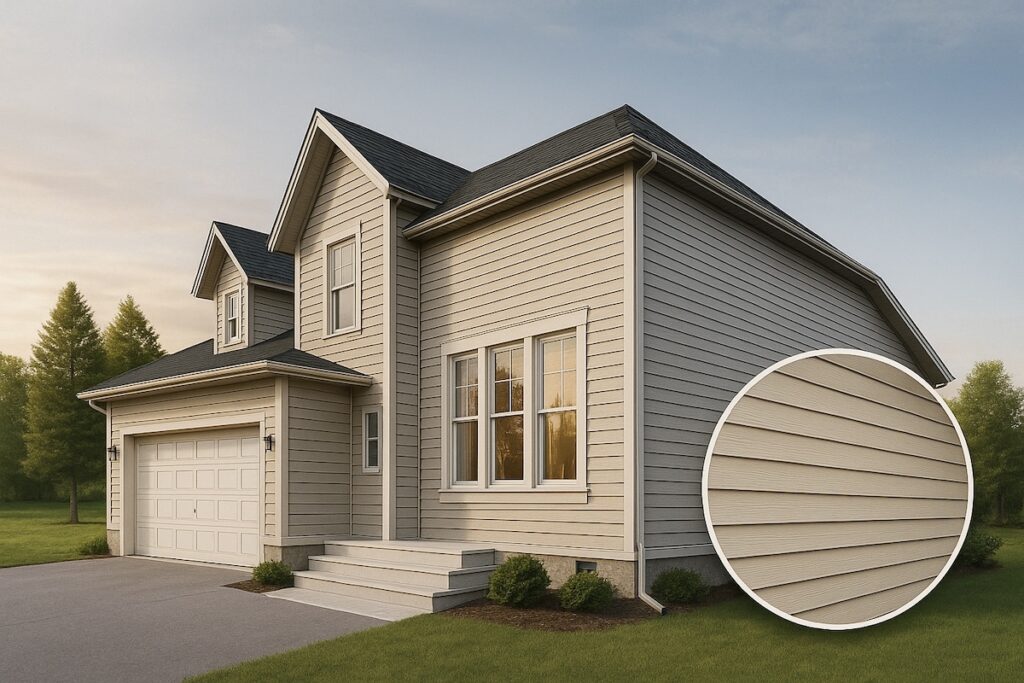
Image Source: Renoworks
What is Vinyl Siding
Vinyl siding is a plastic exterior cladding manufactured primarily from polyvinyl chloride (PVC) that first appeared in the late 1950s as a replacement for aluminum siding. The material consists of approximately 80 percent PVC resin with the remaining 20 percent being additives for color, UV resistance, flexibility, and durability. Most vinyl comes with color baked directly into the material rather than applied as a coating, which prevents chipping and flaking. Modern manufacturing uses co-extrusion to create two-layer panels with a weatherable capstock layer that includes titanium dioxide for UV protection.
Pros of Vinyl Siding
Vinyl delivers several advantages that explain its dominance in residential siding:
- Low maintenance requirements: No painting, staining, or sealing needed throughout its lifespan
- Affordable upfront costs: Material costs range from $3.00 to $7.00 per square foot, making it 25% to 50% less expensive than fiber cement or wood
- Color variety: Dozens of colors available with UV-stable pigments and fade-resistant technology
- Pest resistance: Immune to termites, carpenter ants, and rot due to its PVC composition
- Weather flexibility: Expands and contracts with temperature changes, preventing cracking in moderate climates
Insulated vinyl siding adds a foam backing layer that improves energy efficiency by 15-20%, reducing heating and cooling costs.
Cons of Vinyl Siding
On the other hand, vinyl has limitations worth considering. The material becomes brittle in extremely cold weather, making it susceptible to cracking from impacts[82]. Heat presents another problem, as vinyl can warp or melt when exposed to excessive temperatures from grills, fire pits, or reflective windows.
Painting vinyl voids most manufacturer warranties and may not be honored by insurance providers if you file a claim. Houses with vinyl siding can appear flat, reducing character compared to wood or fiber cement. Correspondingly, vinyl may not boost resale value as much as premium materials in high-end neighborhoods.
Vinyl Siding Cost and Lifespan
| Cost Component | Price Range |
|---|---|
| Materials | $3.00–$7.00 per sq ft |
| Labor | $2.50–$5.00 per sq ft |
| Total Installed | $4.00–$12.00 per sq ft |
| Average Project | $6,000–$16,000 |
Vinyl siding lasts 20-40 years on average, with high-quality installations potentially reaching 60 years provided maintenance stays consistent.
Best Uses for Vinyl Siding
Vinyl performs best for budget-conscious homeowners in moderate climates seeking low-maintenance exteriors. The material suits single-story homes with simple layouts where installation complexity stays minimal. Avoid vinyl in historic neighborhoods where architectural guidelines require traditional materials.
Wood Siding

Image Source: Real Cedar
What is Wood Siding
Wood siding represents a natural exterior cladding option available in styles including clapboard, shingles, shakes, and board-and-batten. Common species include cedar, redwood, and pine, each offering distinct grain patterns and durability levels. Cedar and redwood contain natural chemicals that resist decay and repel insects, while pine provides a more affordable alternative requiring additional treatment. The material can be oriented horizontally, vertically, or diagonally depending on style preference.
Pros of Wood Siding
Natural beauty stands as wood’s defining characteristic. The warm, organic esthetic creates a timeless look that synthetic materials struggle to replicate. You can paint or stain wood in virtually any color, allowing customization that matches your vision.
Installation accessibility makes wood appealing. Virtually any competent contractor can install it, and homeowners with moderate carpentry skills can handle the work themselves. Replacing damaged sections stays straightforward compared to materials requiring specialized tools or techniques.
Environmental sustainability matters. Wood is renewable and biodegradable, decomposing naturally without creating lasting landfill waste. The material provides natural insulation properties that improve energy efficiency.
Cons of Wood Siding
Maintenance demands remain the primary drawback. Wood requires painting or staining every 2 to 5 years to protect against moisture and UV damage. Without regular sealing, boards will crack, warp, or rot.
Moisture absorption creates multiple problems. Water causes swelling, warping, and eventually rot if left unaddressed. Built-up moisture also encourages mold and mildew growth.
Insect damage poses ongoing risks. Termites, carpenter ants, and wood-boring beetles target vulnerable siding, potentially causing structural damage. Annual inspections help catch infestations early.
Fire vulnerability increases insurance costs. Wood ignites quickly compared to fiber cement or brick, leading some insurers to charge higher premiums.
Wood Siding Cost and Lifespan
| Cost Component | Price Range |
|---|---|
| Materials + Installation | $6.90–$13.90 per sq ft |
| National Average (May 2026) | $10.46–$16.40 per sq ft |
| Full Replacement Project | $13,899–$39,258 |
Wood siding lifespan varies by species. Pine lasts approximately 20 years, while cedar and redwood reach 40 to 75 years with proper maintenance. Premium cypress can exceed 100 years in ideal conditions.
Best Uses for Wood Siding
Wood performs best for homeowners prioritizing esthetic appeal over low maintenance. Historic properties often require wood to maintain architectural integrity. Avoid wood in high-humidity regions or areas with heavy rainfall unless you commit to rigorous maintenance schedules.
Brick Siding

Image Source: Mike Holmes
What is Brick Siding
Dating back to 7000 BC, brick remains one of the oldest building materials still in widespread use. Manufactured from clay and shale, two abundant natural resources, brick provides either solid masonry construction or veneer applications. Solid brick uses two layers with header bricks connecting them, while brick veneer consists of a single layer attached to wood or steel framing. Modern installations typically use veneer due to lower costs and easier installation compared to structural solid brick.
Pros of Brick Siding
Longevity distinguishes brick from alternatives. Houses built with brick can last at least 100 years with minimal maintenance, and with regular mortar repointing, they can survive 500 years or more. Brick veneer, when properly maintained, exceeds 100 years.
Fire resistance provides safety advantages. As a non-combustible material, brick resists ignition and helps contain fires within structures, potentially lowering insurance premiums. The material also withstands extreme weather including hurricanes, tornadoes, and earthquakes without cracking or denting.
Energy efficiency comes from thermal mass properties. Brick absorbs heat during daylight hours and releases it slowly at night, reducing heating and cooling costs. Equally, the material blocks sound better than wood or vinyl, creating quieter interiors.
Maintenance stays minimal. Unlike wood requiring regular sealing, brick resists fading, rotting, and insect damage without painting or staining. Homes with brick siding hold their value better than wood or vinyl alternatives.
Cons of Brick Siding
High upfront expenses create barriers. Wall repairs average around $1,650, and painting a 2,500-square-foot brick home costs approximately $7,000 compared to $3,000 for wood or vinyl.
Temperature fluctuations cause problems. In extreme climates, brick may expand and contract, leading to cracks and potential structural damage. Remodeling presents challenges because matching original brick with new brick for seamless appearance proves difficult.
Brick Siding Cost and Lifespan
| Cost Component | Price Range |
|---|---|
| Materials + Installation | $9.00–$28.00 per sq ft |
| Brick Veneer (May 2026) | $14.99–$24.05 per sq ft |
| Average 2,000-sq-ft Home | $26,000 |
| Lifespan | 100–500+ years |
Best Uses for Brick Siding
Brick performs best where longevity and fire resistance matter most. Avoid regions with extreme temperature swings unless you accept potential expansion-related maintenance.
Metal Siding

Image Source: Western States Metal Roofing
What is Metal Siding
Metal panels arrive in four primary materials: steel, aluminum, copper, and zinc. Steel dominates residential applications due to its strength-to-cost ratio, while aluminum offers lighter weight and corrosion resistance. Panels install either with exposed fasteners visible on the surface or concealed fastener systems that hide screws for a cleaner appearance. Panel profiles range from corrugated sheets to standing seam, board and batten, and flush wall designs. Most steel siding uses 24-gage or 26-gage thickness, with lower numbers indicating heavier, more dent-resistant material.
Pros of Metal Siding
Metal withstands extreme weather without rotting, warping, or supporting mold growth. The material carries a Class A fire rating, making it non-combustible and potentially reducing insurance premiums. Steel siding lasts 40 to 70 years, with aluminum reaching 50 years, zinc extending 80 to 100 years, and copper exceeding 100 years.
Maintenance stays minimal beyond occasional washing. Factory finishes eliminate painting requirements for decades. Equally important, metal panels contain at least 70% recycled content and remain 100% recyclable at end of life.
Cons of Metal Siding
Higher initial costs exceed vinyl but compare similarly to fiber cement. Steel siding averages $4.00 to $5.00 per square foot for materials, while installation adds $3.00 to $5.00 per square foot.
Denting occurs from hail or heavy impacts, particularly on lighter gages. Rain creates noticeable noise without insulation backing. Scratches expose bare steel to rust if not touched up promptly. Steel corrodes rapidly in coastal environments with salt spray, requiring corrosion-resistant alternatives like aluminum or stainless steel.
Metal Siding Cost and Lifespan
| Metal Type | Cost Per Sq Ft | Lifespan |
|---|---|---|
| Tin | $1.00–$3.00 | 15 years |
| Aluminum | $3.00–$18.00 | 50 years |
| Steel | $4.00–$16.00 | 50 years [274] |
| Zinc | $15.00–$25.00 | 80–100 years |
| Copper | $20.00–$35.00 | 100+ years |
Total installation ranges from $8.00 to $22.00 per square foot, with national averages between $8.82 and $14.67 per square foot in May 2026.
Best Uses for Metal Siding
Metal performs best in wildfire-prone regions where fire resistance matters most. Weather-exposed areas with harsh storms benefit from its durability. Modern architectural designs favor its clean lines and contemporary profiles. Avoid steel in coastal locations unless using corrosion-resistant metals.
Stucco Siding

Image Source: Burbach Exteriors
What is Stucco Siding
Stucco consists of Portland cement, sand, lime, and water applied as a cement-based plaster to exterior walls. Traditional application occurs in three coats: the scratch coat adheres to metal lath, the brown coat levels the surface, and the finish coat provides texture and color. Modern synthetic stucco (EIFS) adds rigid foam insulation beneath the surface, creating a flexible, energy-efficient alternative that costs 15-35% more than traditional stucco. Dating back to ancient Greek and Roman times, stucco originally used gypsum, marble dust, and glue.
Pros of Stucco Siding
Fire resistance provides significant protection. A one-inch stucco layer adds a one-hour fire rating to walls. The material also resists rot, mold, impact, and termite infestations.
Sustainability stems from locally sourced ingredients and color pigments mixed directly into the material rather than applied as paint. When installed over foam insulation, stucco creates weather-proof seals that reduce heating and cooling costs.
Sound resistance buffers exterior noise, making stucco advantageous for homes near busy streets. The seamless appearance eliminates horizontal or vertical lines typical of wood or vinyl, creating a timeless esthetic. At 26.8%, stucco was the most common principal siding material for new single-family homes.
Cons of Stucco Siding
Porosity creates moisture problems when improperly sealed, allowing water to damage underlying materials. Stucco absorbs stains and collects dirt more easily than alternatives, requiring annual cleaning to prevent mold or mildew growth.
Traditional stucco cracks in regions where soil settles or shifts, though modern versions include polymers for added flexibility. Professional installation remains essential because improper application accelerates moisture intrusion.
Stucco Siding Cost and Lifespan
| Stucco Type | Cost Per Sq Ft | Lifespan |
|---|---|---|
| Traditional 3-coat | $7.00–$9.00 | 50–80+ years |
| EIFS (synthetic) | $8.00–$14.00 | 25–50 years |
National installation averages $10.69 to $17.33 per square foot in May 2026. Lifespan ranges from 50 to 80 years, with some installations exceeding 100 years.
Best Uses for Stucco Siding
Stucco performs best in hot, dry climates where moisture exposure stays minimal. The material struggles in regions with heavy precipitation, extreme temperature fluctuations, or high humidity unless properly constructed for moisture resistance.
Composite Wood Siding

Image Source: Modernize
What is Composite Wood Siding
Blending recycled wood fibers with plastics and resins creates composite wood siding, a man-made material engineered for exterior cladding. Manufacturers compress sawdust, wood shavings, and other timber by-products with binding agents to form boards that replicate natural wood grain. Wood-plastic composite (WPC) versions combine these recycled wood components with recycled plastics like polyethylene or PVC. Some brands use polymeric resins and inorganic minerals instead of wood particles, though this reduces sustainability benefits. Most products feature finish layers that convincingly mimic cedar, oak, or other hardwoods.
Pros of Composite Wood Siding
Composite wood resists rot, splitting, and insect damage far better than natural wood. The material requires no regular painting or sealing, saving time and maintenance costs. Environmental benefits stand out, as products contain up to 95% recycled materials including reclaimed wood fibers and plastic bottles. Installation proceeds quickly because boards cut with standard woodworking tools rather than specialized equipment. The material returns approximately 70% of its cost at resale. Energy efficiency improves through insulation properties that reflect exterior heat. Manufacturers back their products with transferable 25 to 30-year warranties.
Cons of Composite Wood Siding
On the other hand, upfront expenses range from $12.00 to $24.00 per square foot installed, exceeding vinyl and some fiber cement options. Despite engineered durability, composite siding needs painting or sealing every five years to maintain moisture resistance. The material fades gradually from prolonged UV exposure. Temperature fluctuations cause expansion and contraction, requiring proper spacing during installation. Fire resistance falls below fiber cement performance. Moisture sensitivity remains a concern if installation lacks proper sealing.
Composite Wood Siding Cost and Lifespan
| Component | Price Range |
|---|---|
| Materials Only | $4.00–$8.00 per sq ft |
| Composite Cladding | $6.00–$12.00 per sq ft |
| Professional Installation | +$2.00–$5.50 per sq ft |
| Total Installed | $12.00–$24.00 per sq ft |
| Lifespan | 30–50 years |
Some sources indicate lifespans exceeding 100 years with exceptional maintenance, though 30 to 50 years represents typical performance.
Best Uses for Composite Wood Siding
Composite wood suits eco-conscious homeowners seeking sustainable alternatives with authentic wood esthetics. The material performs well across varied climates when properly installed with adequate ventilation. Avoid this option in wildfire-prone areas where fire resistance matters most.
Engineered Wood Siding

Image Source: LP Building Solutions
“Engineered wood siding offers a genuinely beautiful esthetic, competitive pricing, and solid performance when installed correctly and maintained consistently.” — Sorensen Construction Services, Construction Services Company
What is Engineered Wood Siding
Wood fibers and strands bonded with resin under heat and pressure create engineered wood siding, a manufactured product treated with zinc borate to deter termites and fungal growth. The material delivers an authentic cedar-like appearance with improved resistance to rot, insects, and warping. Lighter than fiber cement, it cuts easily with standard tools, speeding installation and reducing labor costs. Brands like LP SmartSide come pre-primed or factory-finished with no-fade guarantees.
Pros of Engineered Wood Siding
The material handles cold and impact well while requiring less upkeep than natural wood. Factory finishes eliminate immediate painting needs. Engineered wood is roughly 300 times stronger than vinyl siding and resists hail damage up to 1¾ inches. Manufacturers offer 50-year limited warranties, with proper maintenance extending lifespan to 30 years or more.
Cons of Engineered Wood Siding
Moisture remains the main vulnerability. Improper installation allows water penetration, causing swelling and rot. Repainting every 7 to 10 years maintains protection. The material costs more than vinyl initially and, because it contains real wood, remains combustible unlike fiber cement.
Engineered Wood Siding Cost and Lifespan
Installation costs range from $4.00 to $13.00 per square foot. Lifespan reaches 20 to 30 years, with some installations exceeding 30 years given excellent maintenance.
Best Uses for Engineered Wood Siding
Choose engineered wood when you want authentic wood esthetics faster than fiber cement installation allows, as long as fire codes permit combustible materials.
Stone Siding
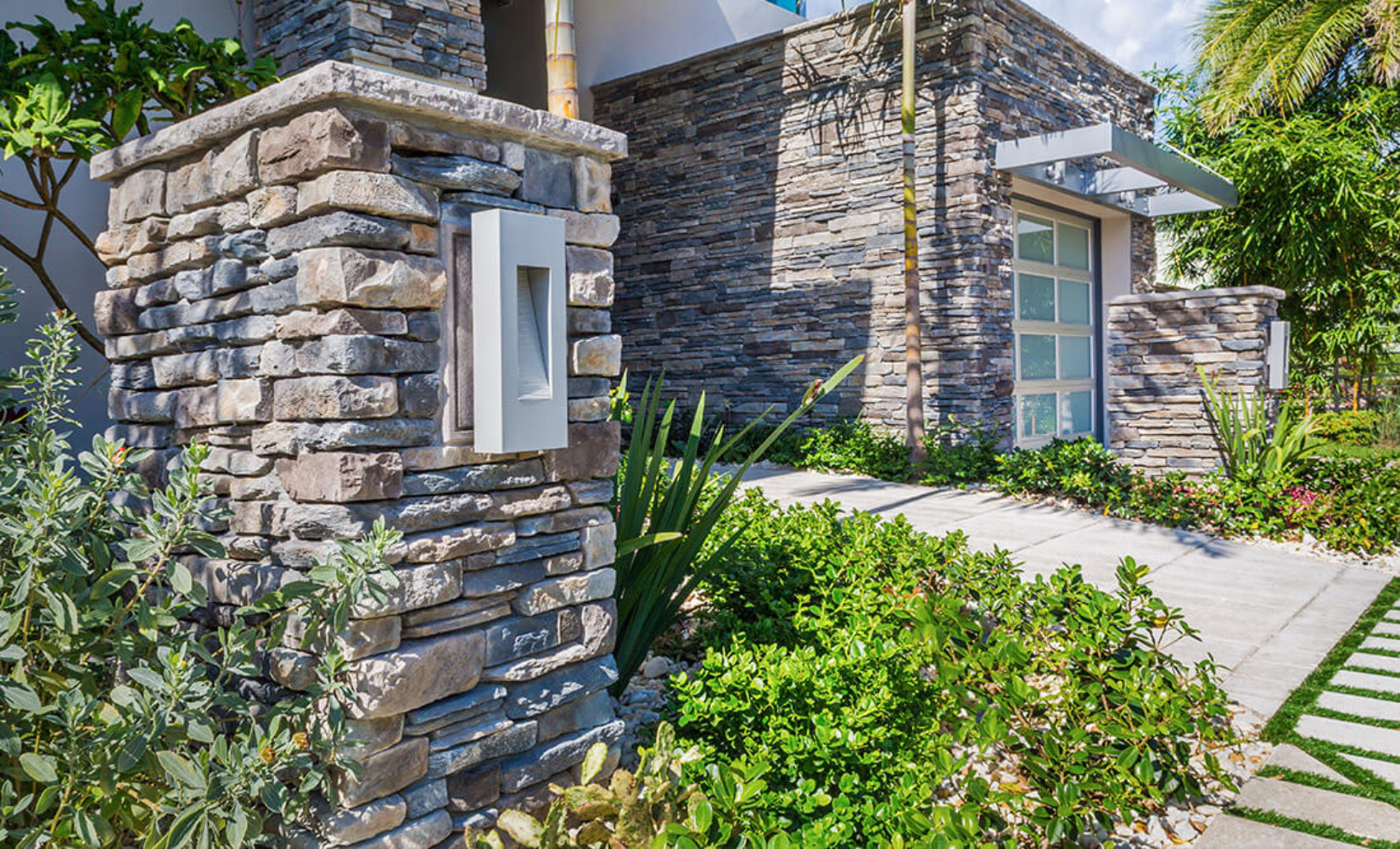
Image Source: Westlake Royal Building Products
What is Stone Siding
Stone veneer applies a thin layer of natural or manufactured stone to exterior walls, delivering authentic stone esthetics without full masonry’s structural demands. Natural stone veneer cuts directly from quarried stone to thicknesses between 3/4 inch and 1 1/4 inches. Manufactured stone veneer mixes Portland cement, lightweight aggregates like pumice, and iron-oxide pigments shaped in molds created from real stones.
Pros of Stone Siding
Stone veneer adds property value and curb appeal while weighing significantly less than full-stone construction. Natural stone lasts indefinitely when properly installed, resisting moisture, heat, and freezing temperatures without fading. The material requires minimal upkeep compared to wood or vinyl.
Cons of Stone Siding
Manufactured versions fade over time due to synthetic dyes and chip more easily, exposing concrete interiors. Moisture intrusion causes devastating rot when installation lacks proper gaps for drainage. Stone absorbs moisture, creating mold risks in humid climates.
Stone Siding Cost and Lifespan
| Stone Type | Cost Per Sq Ft | Lifespan |
|---|---|---|
| Manufactured | $5.00–$8.00 + $2.00–$4.00 install | 10–25 years |
| Natural | $11.00–$18.00 + $2.00–$4.00 install | 50+ years (often indefinite) |
| Installed Range | $18.00–$38.00 | Varies by type |
Best Uses for Stone Siding
Stone veneer performs well as architectural accents around entryways, columns, and lower exterior walls. Avoid high-humidity regions or pool areas where chemicals damage surfaces.
Aluminum Siding

Image Source: Vedrex
What is Aluminum Siding
Lightweight aluminum coils coated with paint or enamel form aluminum siding, a material that gained traction in the mid-20th century as a rot-resistant alternative to wood. Available in horizontal and vertical panels, the material comes in various finishes including smooth, textured, and embossed surfaces. Thickness gets measured in gages, with 44-gage representing the standard and 53-gage offering stronger, more dent-resistant performance.
Pros of Aluminum Siding
Aluminum resists fire with an almost fireproof rating, potentially lowering homeowner insurance premiums. The material stays waterproof and rust-proof, making it suitable for coastal communities with salt spray. Owing to its recyclable nature, about 65% of aluminum used in the United States gets recycled. Insulating properties help maintain interior temperatures, while the lightweight composition simplifies installation and reduces labor costs. You can repaint aluminum when factory finishes fade.
Cons of Aluminum Siding
Denting and scratching occur easily from hail, wind, or impacts. Rain and hailstorms create noticeable noise, coupled with occasional pinging sounds during temperature fluctuations. Colors fade over time, and chalky oxidation develops on surfaces after years of exposure. Repainting every 10 years maintains appearance.
Aluminum Siding Cost and Lifespan
| Component | Price Range |
|---|---|
| Materials + Installation | $8.87–$14.78 per sq ft |
| Lifespan | 30–50 years |
Best Uses for Aluminum Siding
Aluminum performs well in coastal regions, wildfire-prone areas where fire resistance matters, and locations with extreme cold where vinyl becomes brittle.
Fiber Cement Board and Batten Siding

Image Source: James Hardie
What is Board and Batten Siding
Wide vertical boards joined by narrow battens create board and batten siding, a system where overlapping strips shed water efficiently while delivering pronounced vertical lines. Originally used on barns and farmhouses, this style now appears across contemporary, mountain, and traditional home designs. The battens cover seams between boards, creating shadow depth and dimensional texture. Materials include natural wood, engineered wood, vinyl, and fiber cement, each offering different durability and maintenance profiles.
Pros of Board and Batten Siding
Vertical orientation adds perceived height to single-story homes. Fiber cement delivers an 88% return on investment nationally, outperforming many alternatives. Damaged boards replace individually without removing entire wall sections. The design guides water downward, reducing leak risk when properly flashed. Additionally, fiber cement resists rot and insects while paint holds 10 to 15 years.
Cons of Board and Batten Siding
Installation demands precision alignment and correct flashing. Wood versions require sealing every few years to prevent moisture damage. Costs run 10 to 25% higher than lap siding in equivalent materials. Temperature swings cause poorly installed boards to warp or buckle.
Board and Batten Siding Cost and Lifespan
| Material | Cost Per Sq Ft (Installed) | Lifespan |
|---|---|---|
| Vinyl | $3.00–$6.00 | <citation index=”6″ link=”https://insideoutinspectionsplus.com/blog/pros-and-cons-of-board-and-batten-exterior-siding/” similar_text=”Material |
| Engineered Wood | $5.00–$11.00 | <citation index=”6″ link=”https://insideoutinspectionsplus.com/blog/pros-and-cons-of-board-and-batten-exterior-siding/” similar_text=”Material |
| Fiber Cement | <citation index=”6″ link=”https://insideoutinspectionsplus.com/blog/pros-and-cons-of-board-and-batten-exterior-siding/” similar_text=”Cost Breakdown Material Type | Average Cost per Sq. Ft. (Installed) |
For a 2,000-square-foot home, total installation ranges from $10,000 to $26,000.
Best Uses for Board and Batten Siding
Fiber cement handles heavy snow and high winds best, making it suitable for mountain regions. Choose this style for farmhouse, craftsman, or contemporary architectural designs.
Comparison Table
Comparison Table: 11 Best Home Siding Materials in 2026
| Siding Material | Cost per Sq Ft (Installed) | Lifespan | Fire Resistance | Maintenance Requirements | Key Advantages | Key Disadvantages | Best Use Cases |
|---|---|---|---|---|---|---|---|
| Fiber Cement Siding | $8.92–$14.69 | 40–50 years (up to 100 years with excellent maintenance) | Class A fire rating, non-combustible | Minimal; rinse 1-2x yearly, pre-finished colors available | 114% ROI at resale, resists warping/cracking/fading, termite-proof, design versatility | High upfront cost, low R-value (0.15–0.5), heavy (150 lbs per 50 sq ft), requires professional installation | Wildfire-prone areas, coastal homes, extreme temperature zones |
| Vinyl Siding | $4.00–$12.00 | 20–40 years (up to 60 years with quality installation) | Not mentioned | Very low; no painting, staining, or sealing needed | 25-50% less expensive than fiber cement, pest-resistant, color variety, insulated versions improve energy 15-20% | Brittle in cold weather, warps in heat, painting voids warranty, may not boost resale value in high-end areas | Budget-conscious homeowners, moderate climates, single-story homes with simple layouts |
| Wood Siding | $10.46–$16.40 | 20–75 years (varies by species: pine 20 years, cedar/redwood 40-75 years) | Poor; ignites quickly, increases insurance costs | High; painting/staining every 2-5 years required | Natural beauty, customizable colors, DIY-friendly installation, renewable/biodegradable, natural insulation | High maintenance, moisture absorption causes rot/warping, insect damage risk, fire vulnerability | Homeowners prioritizing esthetics, historic properties, not recommended for high-humidity regions |
| Brick Siding | $14.99–$24.05 | 100–500+ years | Non-combustible, contains fires, may lower insurance premiums | Minimal; no painting/staining, resists fading/rotting/insects | Exceptional longevity, extreme weather resistance, thermal mass improves energy efficiency, sound blocking, holds value | High upfront cost ($26,000 avg for 2,000 sq ft home), expansion/contraction in extreme climates, difficult to remodel/match | Areas prioritizing longevity and fire resistance, avoid extreme temperature swing regions |
| Metal Siding | $8.82–$14.67 | 40–100+ years (steel 40-70, aluminum 50, zinc 80-100, copper 100+) | Class A fire rating, non-combustible, may reduce insurance premiums | Minimal; occasional washing, factory finishes last decades | Extreme weather resistance, rot/mold-proof, 70%+ recycled content, 100% recyclable | Higher initial cost, dents from hail, rain noise without insulation, scratches expose steel to rust, steel corrodes in coastal areas | Wildfire-prone regions, harsh storm areas, modern architectural designs, avoid coastal locations for steel |
| Stucco Siding | $10.69–$17.33 | 50–80+ years (up to 100 years) | One-inch layer adds 1-hour fire rating | Moderate; annual cleaning to prevent mold/mildew, may crack in settling soil | Fire-resistant, rot/mold/termite-proof, sustainable, sound-resistant, seamless appearance, 26.8% of new homes use it | Porous when improperly sealed, absorbs stains/dirt, cracks in shifting soil, requires professional installation | Hot, dry climates; struggles in heavy precipitation, extreme temperature fluctuations, or high humidity |
| Composite Wood Siding | $12.00–$24.00 | 30–50 years (up to 100 years with exceptional maintenance) | Below fiber cement performance | Moderate; painting/sealing every 5 years | Rot/insect-resistant, up to 95% recycled materials, 70% ROI, cuts with standard tools, 25-30 year warranties | High upfront cost, requires painting every 5 years, fades from UV, expands/contracts with temperature, moisture-sensitive | Eco-conscious homeowners seeking wood esthetics, varied climates with proper installation, avoid wildfire-prone areas |
| Engineered Wood Siding | $4.00–$13.00 | 20–30 years (up to 30+ years with excellent maintenance) | Combustible (contains real wood) | Moderate; repainting every 7-10 years | 300x stronger than vinyl, authentic cedar appearance, hail-resistant (up to 1¾”), 50-year warranties, lighter than fiber cement | Moisture vulnerability causes swelling/rot if improperly installed, costs more than vinyl, combustible | When authentic wood esthetics desired with faster installation than fiber cement, where fire codes permit combustible materials |
| Stone Siding | $18.00–$38.00 (Natural: $13-22, Manufactured: $7-12) | Natural: 50+ years (often indefinite); Manufactured: 10–25 years | Excellent resistance to heat and freezing | Minimal for natural stone; manufactured versions fade and chip | Adds property value/curb appeal, natural stone lasts indefinitely, resists moisture/heat/freezing, lightweight vs full masonry | Manufactured versions fade/chip, moisture intrusion causes rot without proper drainage, absorbs moisture in humid climates | Architectural accents (entryways, columns, lower walls), avoid high-humidity regions or pool areas |
| Aluminum Siding | $8.87–$14.78 | 30–50 years | Almost fireproof, may lower insurance premiums | Moderate; repainting every 10 years as colors fade | Fire-resistant, waterproof/rust-proof, 65% recycled in US, suitable for coastal areas, lightweight, repaintable | Dents/scratches easily, noisy in rain/hail, colors fade, chalky oxidation develops | Coastal regions, wildfire-prone areas, extreme cold locations where vinyl becomes brittle |
| Fiber Cement Board and Batten | $6.00–$15.00 | 40–60+ years | Same as fiber cement (Class A rating) | Low; paint holds 10-15 years, resists rot/insects | 88% ROI nationally, adds perceived height, individual board replacement, efficient water shedding, rot/insect-resistant | Requires precision installation/flashing, 10-25% higher cost than lap siding, wood versions need frequent sealing, warping risk if poorly installed | Heavy snow/high wind areas, farmhouse/craftsman/contemporary designs, mountain regions |
Conclusion
Now that you’ve explored all 11 siding options, you can see there’s no universal “best” choice. Your decision ultimately depends on your priorities: budget constraints, climate conditions, maintenance tolerance, and esthetic preferences.
Fiber cement siding stands out with its 114 percent return on investment, but vinyl might better suit your budget if upfront costs matter most. Similarly, brick offers unmatched longevity while engineered wood provides faster installation.
Take the case of your specific situation. Match your climate, architectural style, and long-term plans with the material that checks the most boxes. Your home deserves siding that protects and performs for decades.
FAQs
Q1. Which fiber cement siding brand should I choose for my home? James Hardie is the most recognized fiber cement siding brand, having introduced the product in the mid-1980s. Their ColorPlus® Technology offers factory-applied finishes that can last decades without repainting. When selecting a brand, look for manufacturers offering 30-year warranties and pre-finished color options that resist fading.
Q2. What siding colors are trending in 2026? While specific color trends vary by region and architectural style, fiber cement and other siding materials now come in dozens of color options with UV-stable pigments and fade-resistant technology. Many homeowners choose neutral tones that complement their home’s architectural design, with factory-finished colors becoming increasingly popular for their longevity.
Q3. What are the main drawbacks of fiber cement siding? The primary disadvantages include higher upfront costs compared to vinyl, low insulation value (R-value of 0.15 to 0.5), and heavy weight at 150 pounds per 50 square feet. Installation requires professional expertise due to the material’s weight and the need for safety precautions when cutting, as it releases crystalline silica dust.
Q4. How much should I budget for fiber cement siding on a 2,000 square foot house? For a 2,000 square foot home, fiber cement siding installation typically costs between $17,840 and $29,380, based on the national average of $8.92 to $14.69 per square foot. The total cost varies depending on panel style, with lap siding being the most budget-friendly option while panels and shingles require more detailed installation.
Q5. How long does fiber cement siding last compared to other materials? Fiber cement siding lasts 40 to 50 years with proper installation and can exceed 100 years with excellent maintenance. This surpasses vinyl siding (20-40 years) and engineered wood (20-30 years), though it falls short of brick (100-500+ years) and natural stone (indefinite lifespan). Most manufacturers back fiber cement with 30-year warranties.